

International travel is rarely a leisure-only activity for modern executives. More often, it is a strategic necessity tied to growth, partnerships, and operations. As organizations expand into increasingly complex geopolitical environments, ensuring safe travel becomes more challenging. Effective security does not begin at the airport – it begins weeks or months in advance with a structured evaluation of risk.
Maintaining personal safety and operational continuity requires more than logistical planning. It requires a security approach grounded in intelligence, where risks are identified, assessed, and mitigated before an executive ever departs.
Pre-Departure Analysis as a Security Foundation

Corporate travel planning often prioritizes efficiency – flight schedules, hotel proximity, and meeting logistics. While these elements are necessary, they can also introduce vulnerabilities if not evaluated through a security lens.
An intelligence-driven approach treats every aspect of travel as a potential point of risk. Pre-departure analysis focuses on understanding the destination environment in detail, moving beyond high-level advisories to develop a more nuanced risk profile.
This typically includes:
- Geopolitical stability – Assessing political conditions, civil unrest, and potential disruptions that could impact travel or safety
- Local crime patterns – Evaluating hyper-local risks that may influence route planning, accommodations, and movement
- Digital risk exposure – Understanding the cyber threat landscape, including surveillance risks, data interception, and potential targeting of corporate assets
A well-executed analysis provides context that allows security teams to make proactive decisions. Rather than reacting to issues as they arise, they can adjust plans in advance to minimize exposure.
Expanding Risk Visibility Beyond Traditional Intelligence

Traditional risk assessments often focus on visible threats such as crime rates or political unrest. However, modern executive travel requires a broader scope of analysis that includes indirect and emerging risks. These can stem from infrastructure weaknesses, regulatory unpredictability, or even shifts in public sentiment toward foreign business presence.
Understanding these layers requires combining multiple intelligence sources, including open-source reporting, local contacts, and digital monitoring. Security teams increasingly rely on integrated intelligence platforms that provide real-time updates and predictive insights. This allows them to identify patterns rather than isolated incidents.
For example, a seemingly stable destination may still present risks due to localized protests or sudden regulatory changes affecting business operations. Without deeper analysis, such factors remain overlooked until they escalate.
Intelligence-Driven Travel Security
Red5 Security, a managed protective intelligence provider focused on executive and high-net-worth risk, approaches travel security as an intelligence-driven process. Evaluating global risk is only one component of a broader strategy that integrates continuous monitoring, informed logistics, and pre-planned responses.
This approach shifts the focus from static planning to adaptive execution. Security is not treated as a fixed set of measures, but as a dynamic process that evolves alongside changing conditions.
Integrating Cybersecurity Into Executive Travel Planning

Digital exposure has become one of the most underestimated risks in executive travel. Leaders often carry sensitive corporate data across borders, making them attractive targets for cybercriminals and state-level surveillance.
Security planning now extends beyond physical safety to include protection of devices, communications, and data access. Preparing secure travel environments may involve issuing clean devices, encrypting communications, and restricting access to sensitive systems while abroad.
In addition, behavioral awareness plays a critical role. Executives must understand how routine actions, such as connecting to public networks or discussing confidential topics in semi-public spaces, can create vulnerabilities.
A comprehensive approach ensures that digital and physical security are aligned. Threats no longer operate in isolation, and neither should the defenses designed to mitigate them.
Three Pillars of Executive Travel Security
Insights gained during pre-departure analysis inform a structured approach to protecting executives throughout the travel lifecycle. This approach is often built on three core pillars:
Managed intelligence – Continuous monitoring of relevant environments before and during travel allows security teams to detect emerging risks in real time. This includes tracking geopolitical developments, local incidents, and digital signals that may impact the executive’s safety. When necessary, itineraries can be adjusted based on new intelligence.
Intelligence-driven logistics – Transportation and movement are among the most vulnerable aspects of travel. An intelligence-led approach prioritizes vetted personnel, secure routes, and situational awareness over convenience. Decisions are informed by current risk conditions rather than static plans.
Risk mitigation planning – Proactive planning ensures that responses are defined before they are needed. This may include identifying secure locations, establishing emergency protocols, and coordinating medical support. Having these measures in place allows executives to operate with confidence, even in uncertain environments.
The Role of Real-Time Monitoring During Travel

Planning does not end once an executive departs. Travel environments are fluid, and conditions can shift quickly due to political developments, security incidents, or natural events. Continuous monitoring ensures that security strategies remain aligned with real-time conditions.
Organizations with mature travel risk programs maintain active oversight through dedicated monitoring teams or intelligence platforms. These systems track global events and cross-reference them with traveler locations, enabling immediate alerts and rapid response when risks emerge.
This capability transforms security from a static plan into a responsive system. If a protest develops near a hotel or a route becomes unsafe, adjustments can be made without delay.
Real-time awareness reduces reliance on assumptions made during initial planning. It ensures that executives are supported by current information, not outdated assessments.
From Planning to Proactive Protection
Effective travel security is not defined by visible measures alone. In many cases, the most impactful work happens before a trip begins and behind the scenes while it is underway. By integrating intelligence into every phase of travel, security teams can reduce uncertainty and limit exposure to risk.
As global travel becomes more complex, the limitations of purely logistical planning become more apparent. Executives require a more adaptive approach – one that accounts for evolving conditions and anticipates potential threats before they materialize.
Treating executive travel as an intelligence-driven process transforms security from a reactive function into a proactive capability. It ensures that safety is not left to chance, but is instead the result of informed, deliberate planning grounded in real-world risk.
Building a Culture of Preparedness Within Organizations
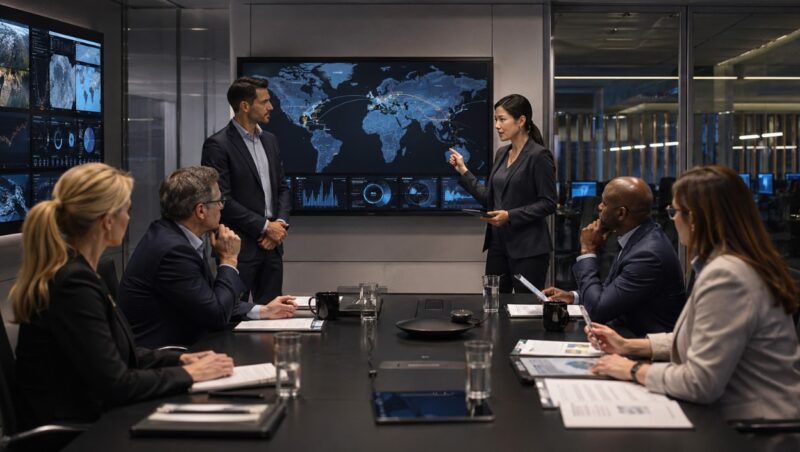
Sustainable travel security depends not only on processes, but also on organizational mindset. Companies that treat travel risk as a strategic priority tend to respond more effectively to disruptions and maintain stronger operational continuity.
Creating this culture involves clear communication, defined responsibilities, and consistent training. Executives should be briefed not only on destination risks, but also on expected behaviors and response protocols.
Preparation becomes a shared responsibility between security teams and travelers. When both sides understand the risks and the plan, decision-making becomes faster and more effective under pressure.